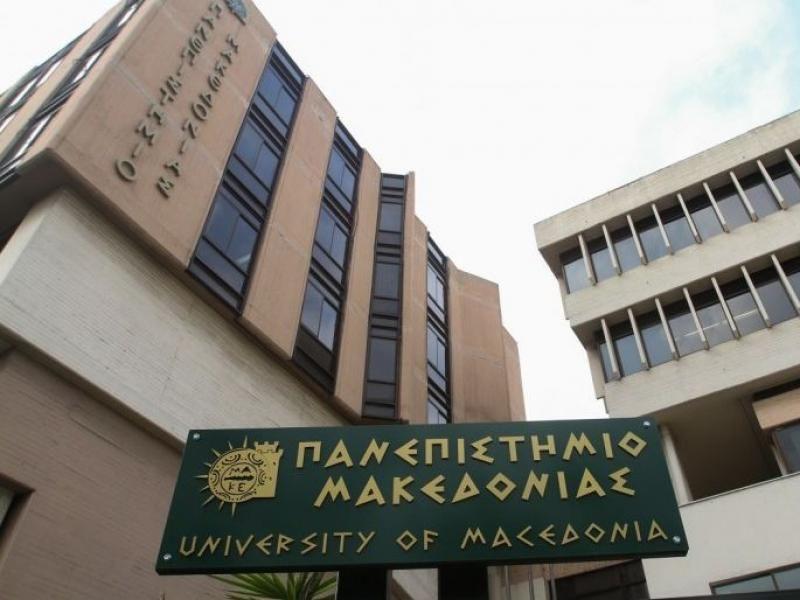
The University of Macedonia in Thessaloniki, Central Macedonia, Northern Greece, a business administration, marketing and computer science school, was founded in 1930 as an industrial school and was converted and operates as a university since just 1990. It operated as a night school until 1948 when it was renamed as the senior industrial school of Thessaloniki (also known as Salonica) and from 1966 its taught disciplines are divided in economic and business studies as it is again divided in two schools in 1985. In 1990 it was converted to the University of Macedonia and teaches computer sciences, informatics, business administration, economics and social and monetary sciences.

As a night school in its early life in 1930, maybe that is the reason why the University of Macedonia is an indoor campus with a perimeter garden. In effect, the entire university is one wide composite and commutable building, making life harder for smokers and making it hard for students to smoke after the smoking ban became an unfortunate reality no one agrees with in Greece in 2010.
Then health minister Demetrios Avramopoulos from the conservative New Democracy party, tried very hard to pacify the public and convince them that the intended smoking ban was a change forward that was supposedly good for them. A feeling of suspended chaos was silently present among everyone who strongly doubt so.

Students drinking cold coffee and smoking Camels or Prince or Marlboro were a typical scene of the life inside the University of Macedonia that had to be abandoned or compromised in any other way after the indoor smoking ban robbed this prestigious university of its student life and its vibrant interior lifestyle.

Students continued to smoke in other universities throughout Greece even inside lectures using purpose-built ashtrays on the desks, but when asked, the reception at the University of Macedonia could confirm that smoking was only allowed out of the front and back entrance in the perimeter garden to the wide campus building.
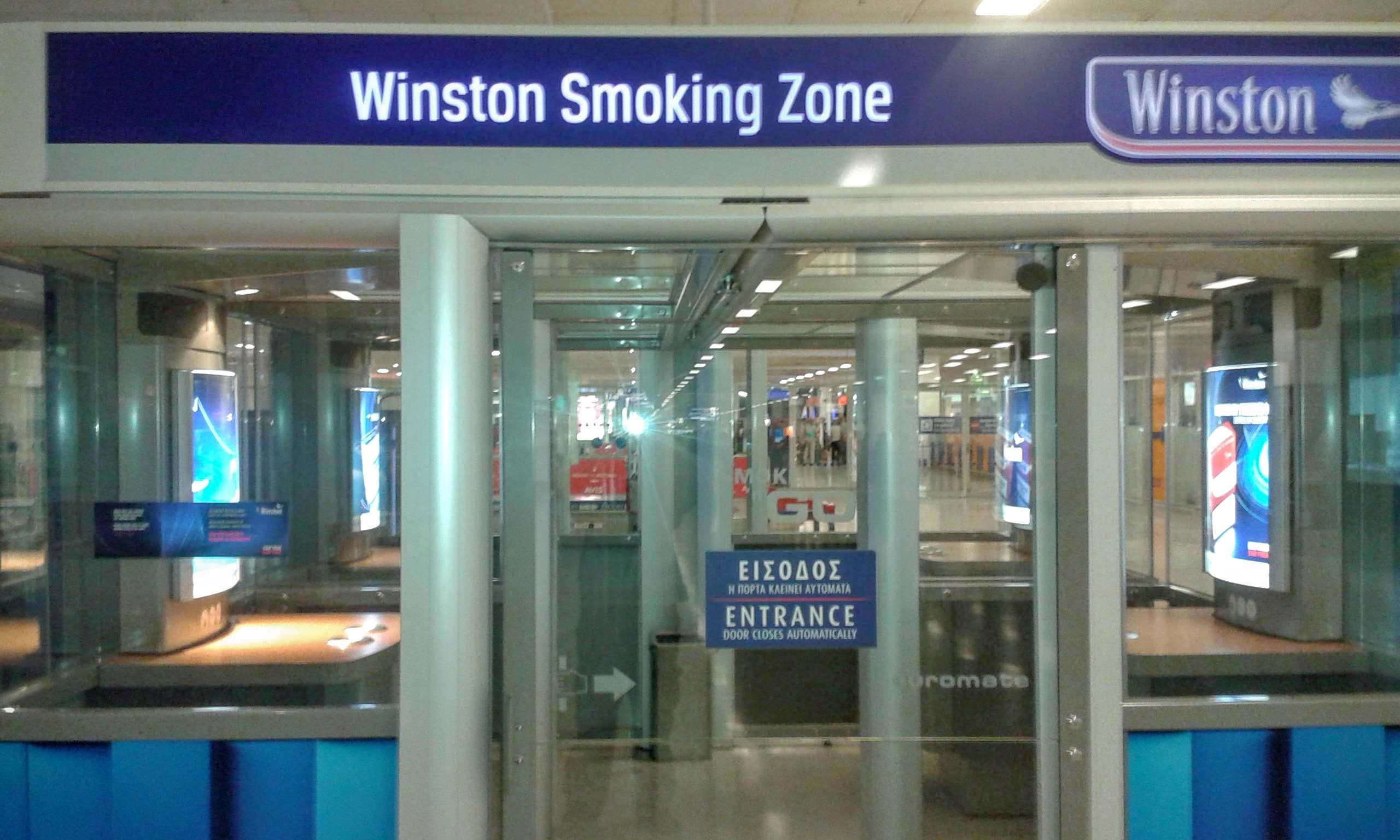
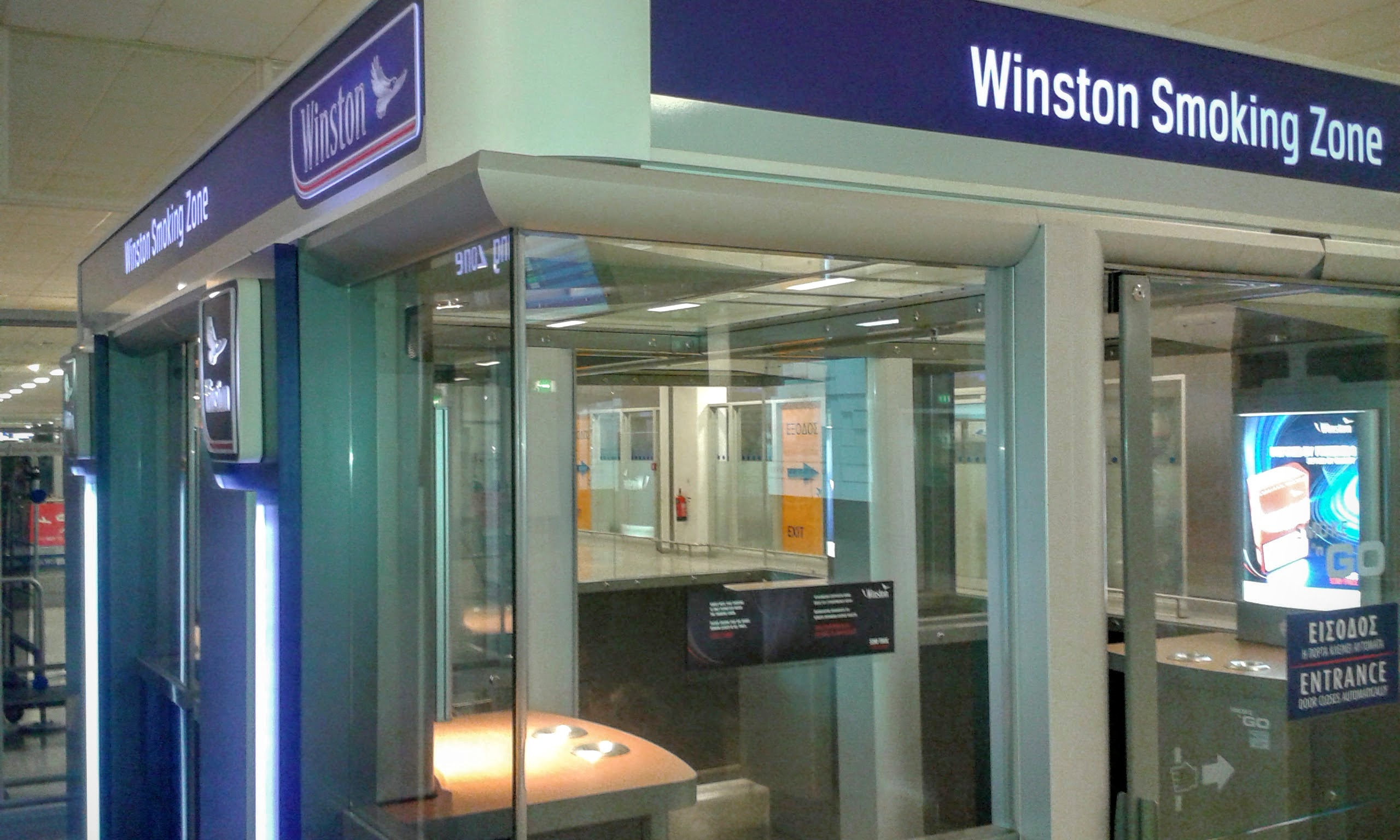
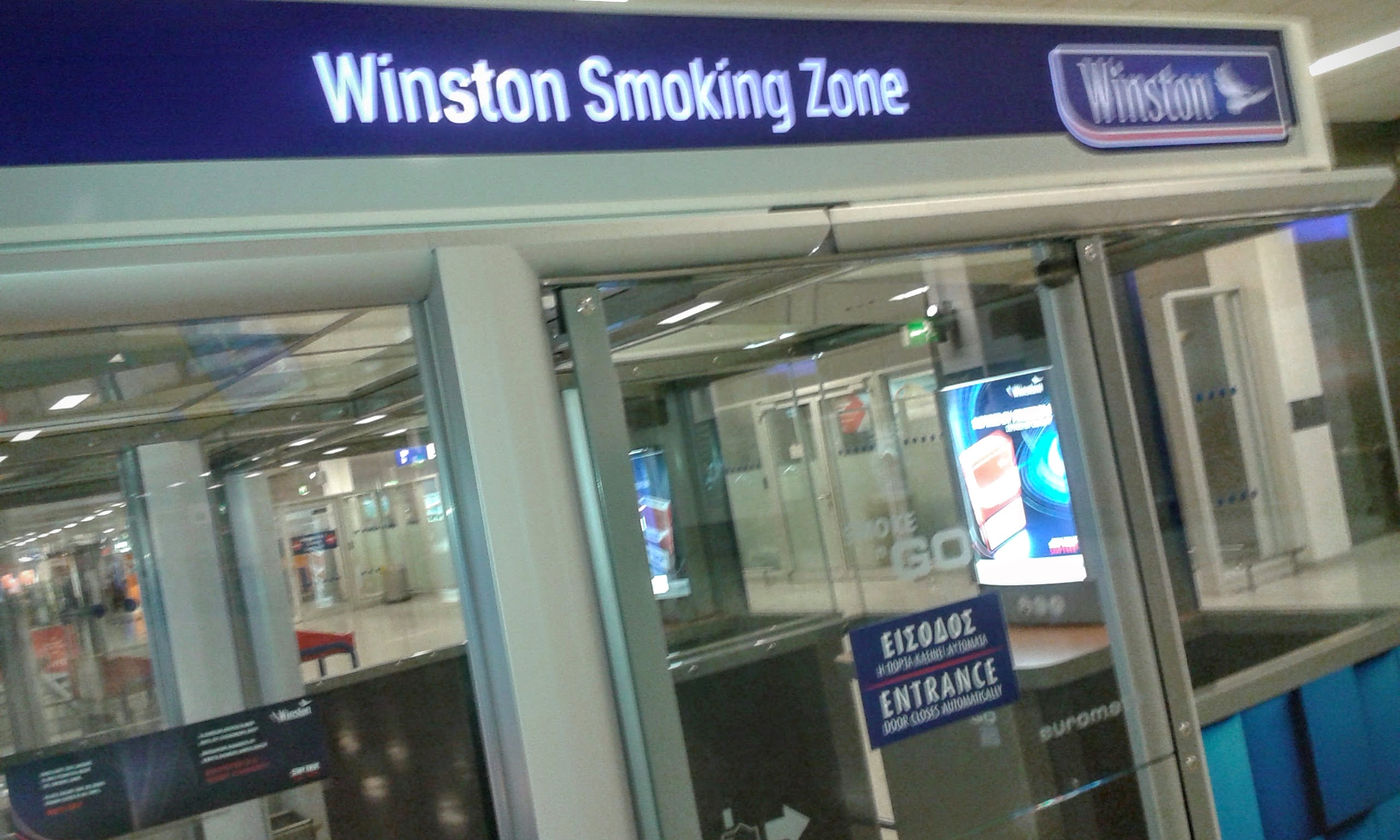
Other university students had to complain and escalate action about the atmosphere created from heavy and parallel indoor smoking in numerous universities, but the University of Macedonia lacks a smoking lounge similar to those found in 14 international airports including Athens International Airport, that would be ideal and best suited to its architecture and student life and requirements.


The University of Macedonia has produced a study on smoking throughout Europe and Greece and among university students in Greece, of which an excerpt follows. The study was conducted in 2019 before checks for indoor smoking intensified, with the return of the conservative New Democracy party in government after the SYRIZA party left-wing rule of 2015-2019, and the strict enforcement of the smoking ban by closing one of its windows that permitted legitimate indoor smoking in live music venues:
Tackling the phenomenon of tobacco consumption concerns the individual himself and depends on his own will and effort if he will achieve his goal, despite the fact that smoking is addictive, to quit the admittedly harmful habit for his personal health, the health of his fellow human beings and his financial situation. Every person who uses tobacco products knows in some cases exactly the consequences of this habit and to what extent he is willing and if he is, to quit smoking.
However, the problem of tobacco consumption has assumed huge dimensions worldwide, as in all countries of the world there are percentages of smokers who use various tobacco products, mainly industrial cigarettes and industrial tobacco. Therefore, smokers, mainly due to the addictive nature of tobacco products, are not able on their own, most of the time, to permanently stop or limit tobacco use. Every state or association of states worldwide is competent to deal with any problems that arise in the lives of their citizens by formulating and implementing appropriate policies so as to eliminate any issue, whether it concerns the health of the population, which will concern us now, or in any other area of the state apparatus. The state as an institution and organ must protect the health of its population.
The problem of smoking has become timeless, it is not a problem that has arisen now. As societies develop and evolve, tobacco control will intensify. Previously, when medicine, technology and research were not developed to such an extent, the harmful substances of tobacco were not widely known. Over the years, the content of tobacco products has become widely known and the negative effects of smoking on health primarily but also on the economy and society have been verified. Therefore, the state mechanism had to take action to limit the use of tobacco products but also to properly inform citizens so that they would be sensitized and especially limit smoking themselves, if they smoke, but also their fellow human beings. The harmful effects that this habit has on themselves, their families, the people around them but also the cost to the personal financial situation and the economy of the state in which they live are significant and for this reason anti-smoking policies began to be designed and implemented.
In order to address this harmful habit in every state, but also at the level of the Union, e.g. the European Union, policy grids, drastic intervention bills on the basis of the problem and a number of actions by state and non-state organizations have been established and strictly applied in several cases. Every state must protect its citizens from every problem they face, and smoking has been for many years and will continue to exist, an issue that needs to be tackled multifaceted and drastically at least to reduce it. For this reason, almost every state implements anti-smoking policies to its entire population.
The Greek authorities compromised with what the European Union said and passed strict laws banning smoking in most places where people in society are active. However, over the years, the phenomenon of poor implementation by all smokers has been strongly observed. Smokers ignore the current legislation and the authorities ignore the violation of the law without detailed checks and when they are rarely carried out, the fact that tobacco products are used indoors is overlooked. [ – Continue reading in Greek.- ]
Argyrios Lymousis MSc 2019
 Bring Back Smoking Freedom