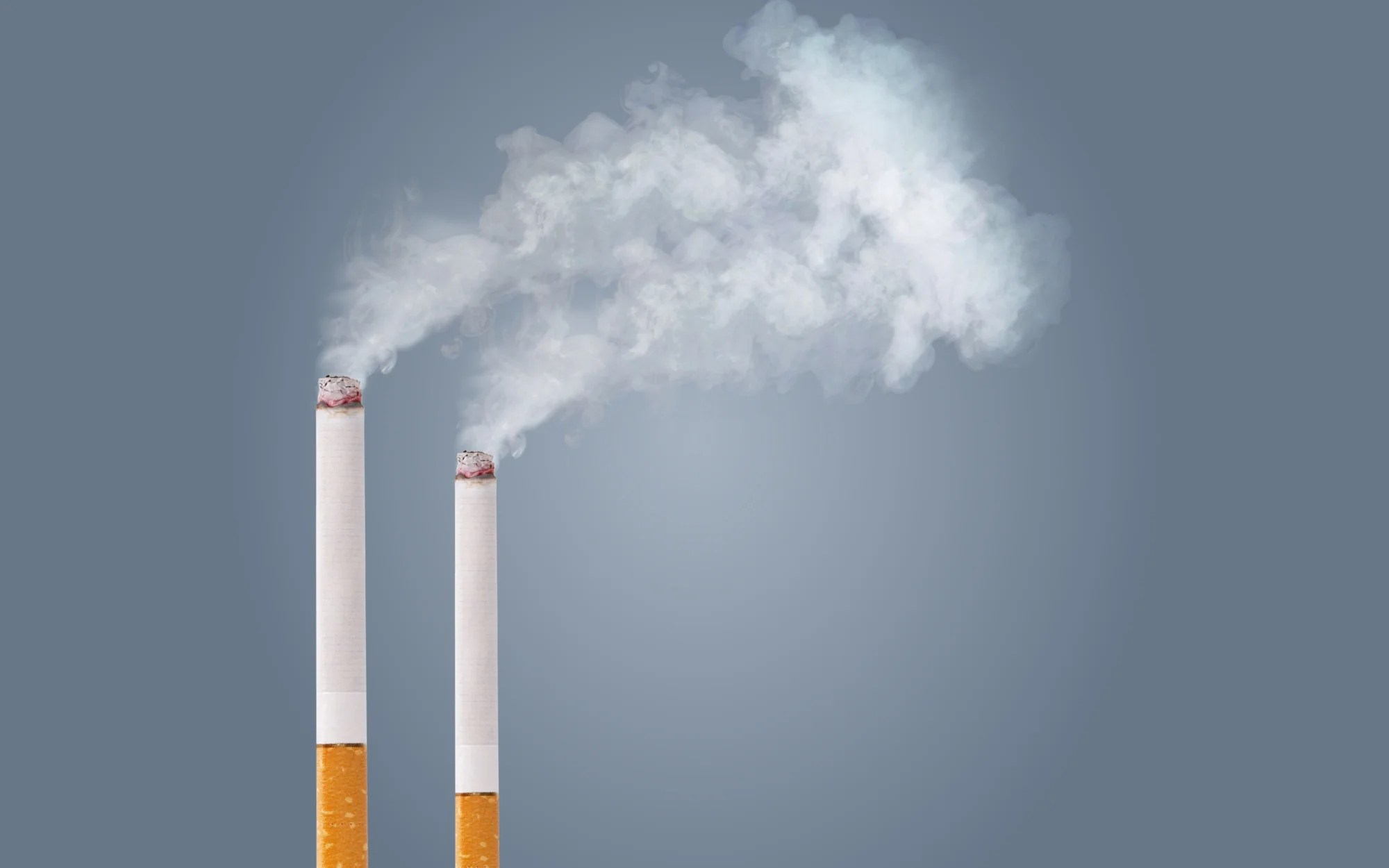
New research has shown that air pollution that is residual in today’s skies is more damaging to public health than smoking and alcohol consumption, with the greatest risk concentrated in South Asia and Africa.
The University of Chicago’s Energy Policy Institute releases its annual Air Quality Life Index report, which this year noted that air pollution accumulated from industrial production, urban traffic, fires and other sources of pollution remains the “most serious exogenous threat to public health,” surpassing smoking and alcohol consumption.
The gap between the current state of air pollution and the implementation of pollutant limits set by the UN World Health Organization reduces life expectancy by 2.3 years compared to the average reduction in longevity of 2.2 years which is caused by smoking.
Researchers based in Cyprus and Germany concluded in 2015 that air pollution caused 8.8 million more deaths worldwide compared to smoking, which currently kills 7 million people worldwide.
“In Europe, the maximum permissible value [of skyborne pollutants] is much too high,” explains an author of the study from the University Centre for Medicine of Mainz, Germany. “In the USA, Australia and Canada the WHO guideline is taken as a basis for legislation, which is also needed in the EU.”
Worldwide, air pollution caused 120 extra deaths in every 100,000 people per year, with deaths in parts of Europe at an even higher rate of up to 200 in 100,000.
“To put this into perspective, this means that air pollution causes more extra deaths a year than tobacco smoking. Smoking is avoidable but air pollution is not.”
 Bring Back Smoking Freedom