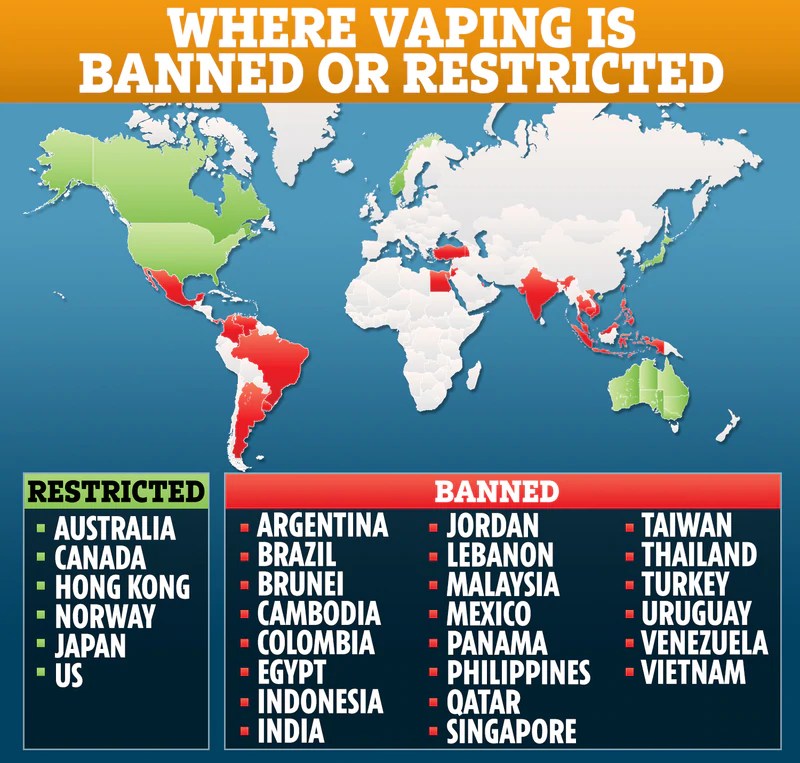
E-cigarettes, although allowed to be sold to most people, are not allowed everywhere. There are 47 countries in the world that ban the consumption of e-cigarettes. The WHO erroneously in controversy, intends for these countries to be more including any relevant restrictions.
Most of the countries are in the Third World or are small states but some of the large countries where e-cigarettes are banned are Turkey and Australia, India and Mexico, Argentina and Colombia, Japan where heated tobacco is allowed and Egypt, Qatar and Saudi Arabia, Syria and Jordan, Venezuela and Uruguay as the smaller ones are the Vatican State and Hong Kong and so on. They have so far included Brazil, where the interim regime tends to change with the central health authority’s (ANVISA’s) view of licensing e-cigarettes with the main argument in favour of collecting huge tax revenues.
In 2019, when the Brazilian health authority ANVISA issued a decree regarding the ban on advertising and the promotion of alternative tobacco products there was 1% of the population that used e-cigs in the big cities. From now on, the legalization of electronic substitutes would mean that they would move to wider areas from large urban centres and have more users than those of the 1%. Distribution networks and industrial actors are pushing for the legalization of e-cigarettes in this huge market with high dynamic consumption. ANVISA declined to comment on the change of attitude. The ban has been in force in Brazil since 2009.
 Bring Back Smoking Freedom