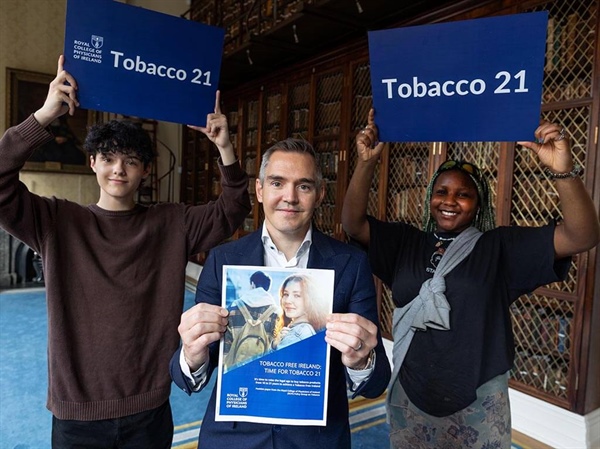
From 2027, you will have to be at least 21 years old to purchase tobacco in the Republic of Ireland. This is the new legislation that the seperatist independent state of the Irish Republic had passed late 2024, that was enacted by its president during 2025 and will take effect next year in 2027, requiring the age of at least 21 years for tobacco purchases.
But now the Irish government wants to blow all this up by reversing the progress that was made with the “Tobacco 21” way of settlement with a generational tobacco purchase ban similar to the one that is in force in Great Britain since this year, namely the Tobacco and Vapes Act 2026 which has gained Royal Assent on the 29th of April 2026 after clearing all stages in parliament through a lengthy and interrupted process (full story).
Ireland currently holds the EU rotating presidency of the Council of Europe from July to December 2026, and next comes Denmark in 2027 and then Greece for the latter half. A generational tobacco purchase ban is deemed against EU law and has been blocked in the past from being legislated in Ireland. Now the country’s government, whether it expresses the will of the people of Ireland in doing so or not, wants to try its luck with the EU again under its EU presidency and defy EU law and reverse the progress that was made by setting 21 as the minimum age required to purchase tobacco.
A fiercely opinionated Irish health minister revived the spirit of the anti-smoking campaign by stating that officials “are reviewing a range of options as part of the country’s updated Tobacco Free Ireland strategy.” Jennifer Carroll MacNeill went on to say that “Toabcco is a uniquely lethal product when used exactly as intended by the manufacturer and kills almost 100 people and causes over 1,000 hospitalisations every week in Ireland.” She added that authorities are considering “all measures to fulfil this objective, including a generational ban.” According to a report published by the Irish government, it is looking at “more aggressive approaches” to lower smoking prevalence, which stands at 17%, well above the goal of reducing the rate below 5%.
However, this substantially high smoking rate may drastically reduce after the Tobacco 21 policy will have taken effect next year, and the present government in Ireland seems to be in a hurry to conceal the effects of that policy by scrapping tobacco sales from their root before the smoking rate reduces as a result of the Tobacco 21 regulation.
 Bring Back Smoking Freedom