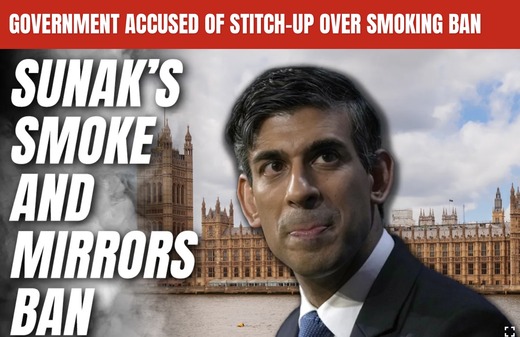
In a healthy democracy and conversational environment all views and opposing views must be considered and all opinions are valid. We agree to disagree and listen and consider the opposing view to the one we might have and respect every possible opinion. This is not what happened with the government considering and evaluating the public consultation responses to the generational smoking ban included in the proposed Tobacco and Vapes Bill. Consultation responses were admittedly disregarded by the government evaluation process on the basis of them originating from tobacco industry affiliation.
The UK is signatory to the World Health Organisation’s Framework Convention on Tobacco Control which subjects the government to its imaginary obligation to prevent the tobacco industry from let alone formulating but even participating in tobacco policy formation. This may go against their democratic right of participation in their governance. This is portrayed as the reason why each consultation respondent was asked to disclose whether they were endorsed, funded or had any other relation of financial nature or otherwise to the tobacco industry, but has it also become the reason why those opinions were disregarded or “not considered” by the government’s evaluation of responses?
Answering a question put to the health minister Andrea Leadsom by fellow Tory MP Karl McCartney, the health secretary said “The consultation received nearly 28,000 responses. Whilst there are no plans to publish the names of all the organisations that responded, we did confirm that we received responses from 896 organisations as well as 307 responses from those who disclosed links with the tobacco industry. As outlined in our consultation response, the UK is a party to the WHO Framework Convention on Tobacco Control and so had an obligation to protect public health policy from the vested interests of the tobacco industry. In the consultation response we summarise the views of respondents with disclosed links to the tobacco industry but have been clear that we have not considered these views when determining our policy response.”.
In other words a debate without a debate, one where the opposite opinion did not count in, where one opinion was not valid enough to be discussed. Or is it the WHO undermining democracy and hence the healthy democratic process in one or all of its member states about the decisions that are performed in public? Let alone that the particular decisions in question belong to the citizens and should not be performed in public. Instead, they should be privately exerted by each individual member of society and belong to each citizen alone who must in turn be free to make them for themselves.
Many of the consultation’s respondents declaring tobacco industry affiliation have been retailers and merchants who are best suited to give an opinion in the capacity interacting with the consumer and hence with the general public, whose opinion must also count for the government’s policy response, and one other was the smokers’ rights group FOREST which is funded by multinational tobacco industries, and its director and Chairman Simon Clark commented on his blog, “Of even greater concern… was the extraordinary revelation that the Government had chosen not to consider the views of the 307 respondents with disclosed links to the tobacco industry ‘when determining our policy response’ due to the ‘vested interests’ of the industry. As you can imagine, retail groups with legitimate links to the tobacco industry are up in arms at the admission that their views on the proposed generational tobacco ban have not been considered, despite the fact that it could have a significant impact on their businesses. Ditto the proposed ban on disposable vapes, for which views were also sought. Meanwhile we’re outraged that the views of law-abiding consumers have also been side-lined in this unprecedented fashion. Forest has been contributing to government consultations for decades and this is the first time any government (including devolved administrations in Scotland and Wales) has told us that our views have not even been considered, let alone acted upon.”.
National president Muntazir Dipoti of the Federation of Independent Retailers wrote to Rishi Sunak protesting about the neglect of their opinions in response to the consultation, and mentioned towards the prime minister that “Our members are at the frontline of society and well placed to comment on how best to take effective action in the real world against products deemed harmful. We do not believe that the consultations on vaping products and tobacco evidenced sufficient awareness of the fact that it is already against the law to sell such products to children. A new law is unnecessary, as the legislation was not lacking – it was enforcement which was badly lacking. By banning the sale of single use vapes in legitimate retail outlets, the governments of the four nations are simply handing a blank cheque to rogue dealers on social media and street corners by school gates. The legislation will impact on visible traders rather than the less visible ones who trade on a large scale”.
 Bring Back Smoking Freedom