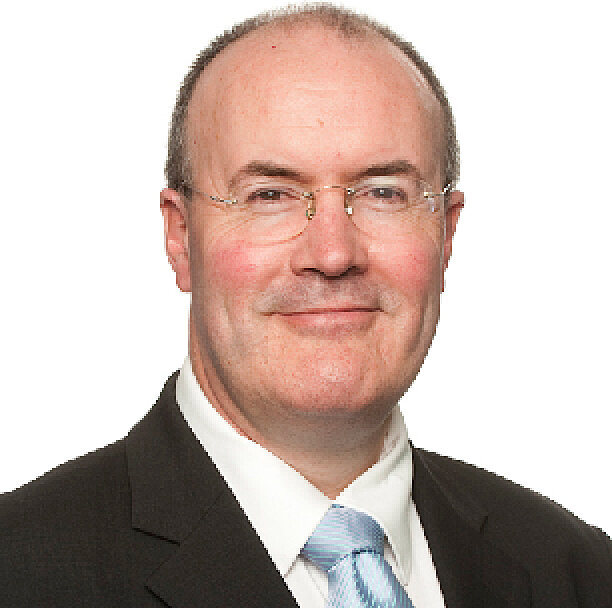
Smokers’ rights association FOREST expressed its chairman’s satisfaction from the recent announcements made from the deputy Secretary of State for Health Neil O’Brien, in the context of eliminating smoking below 5% by 2030, after the undersecretary announced that he will not increase the minimum age requirement for purchasing tobacco by one year each year, as this is what was legislated in New Zealand last December of 2022, and chairman Simon Clark of FOREST stated in response that “Education is always better than coercion so we’re pleased the government appears to favour the carrot not the stick approach to smoking cessation. Vaping is a significantly less harmful alternative to smoking, so it makes sense to encourage smokers to switch to e-cigarettes. If, however, adult smokers still prefer to smoke tobacco, government must respect that choice.” while also referring to the new scheme unleashed by the undersecretary for free distribution of e-cigarettes to one million people who smoke.
The undersecretary stated that helping people to quit is better than forcing them to quit with an incremental age-limit rise of the minimum age requirement to buy tobacco that was enforced in New Zealand on the 13th of December 2022 and the preferred policy that will be followed by the UK government as he received and repeated his answer on a second question on the same topic.
A new initiative by Britain’s Department of Health in partnership with public health, called Swap to Stop, is distributing e-cigarettes to 1 million smokers to help them quit. The exact number of smokers in England approaching 6.6 million people was collected since the last census in 2021 and amounts to around 13.3% of the population. Britain’s National Health Service is set to distribute e-cigarettes to one million smokers in a bid to persuade them to quit.
The UK government website states that “One million smokers will be encouraged to swap cigarettes for vapes under a pioneering new ‘swap to stop’ scheme designed to improve the health of the nation and cut smoking rates. As part of the world-first national scheme, almost 1 in 5 of all smokers in England will be provided with a vape starter kit alongside behavioural support to help them quit the habit as part of a series of new measures to help the government meet its ambition of being smokefree by 2030 – reducing smoking rates to 5% or less. Local authorities will be invited to take part in the scheme later this year and each will design a scheme which suits its needs, including deciding which populations to prioritise.”.
The programme runs for two years and is the first of its kind worldwide to receive nationwide reach following its successful implementation in a limited number of cities including Bath, Southampton, Sheffield and Plymouth. Its announcement coincides with the speech of the deputy minister of public health to eliminate smoking by less than 5% by 2030.
The Deputy Minister of Health Neil O’Brien announced and reiterated the launch of the two-year program and referred to the violation of the nicotine limit of the Chinese brand of e-cigarettes Elf Bar, which were voluntarily withdrawn from supermarkets partially from the market. He also announced the mandatory insertion of information cards inside cigarette packets giving information on smoking cessation.
The Secretary of State pointed out that the one-on-one cut and withdrawal of all smoking with the annual increase in the minimum age for tobacco purchase implemented in New Zealand is not the right solution and direction of the British government instead of helping the population to quit per person. The Secretary of State received a second question from the audience that was present on the same subject. However, it is speculated by many observers that a Labour government, which is the favourite for the next general election after the end of the current five-year term in 2024, may attempt to eliminate smoking with this method without following in the steps of the current Conservative government. The deputy health minister said that smoking cessation using e-cigarettes is followed by the subsequent cessation of their use, which is practised as described by public smoking cessation services in New Zealand.
 Bring Back Smoking Freedom