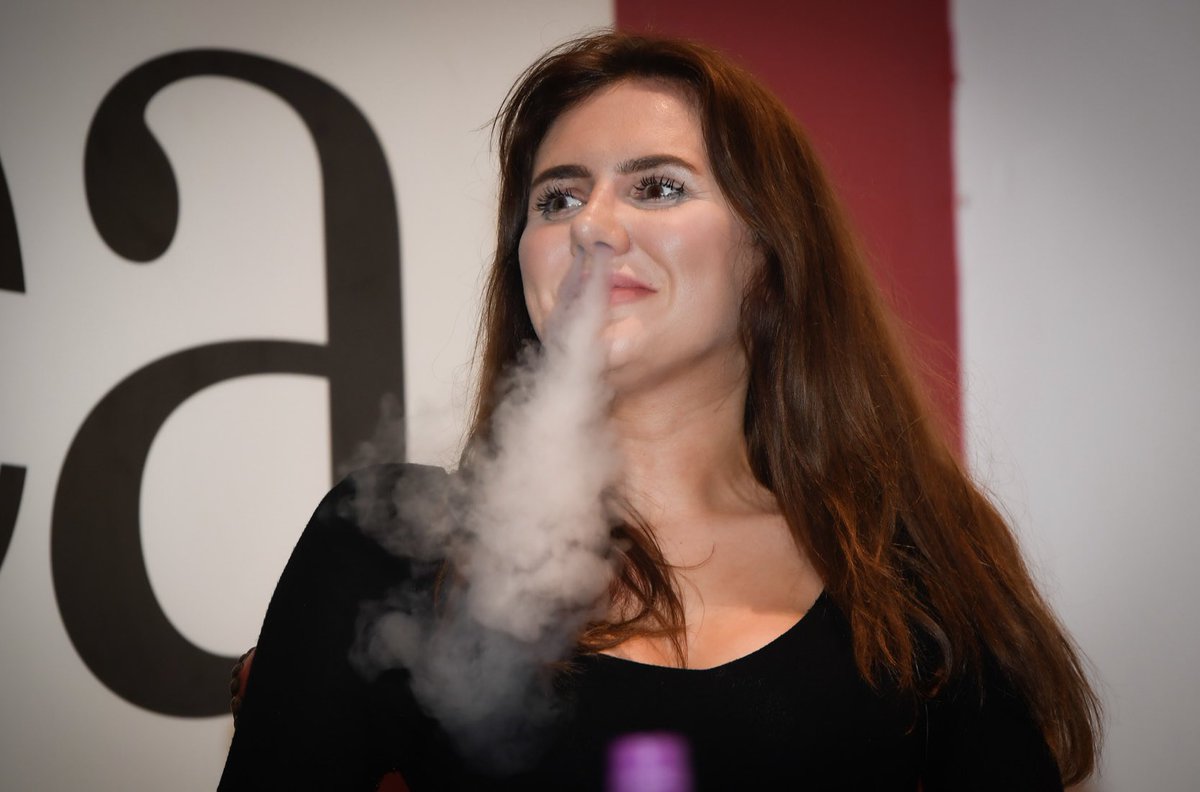
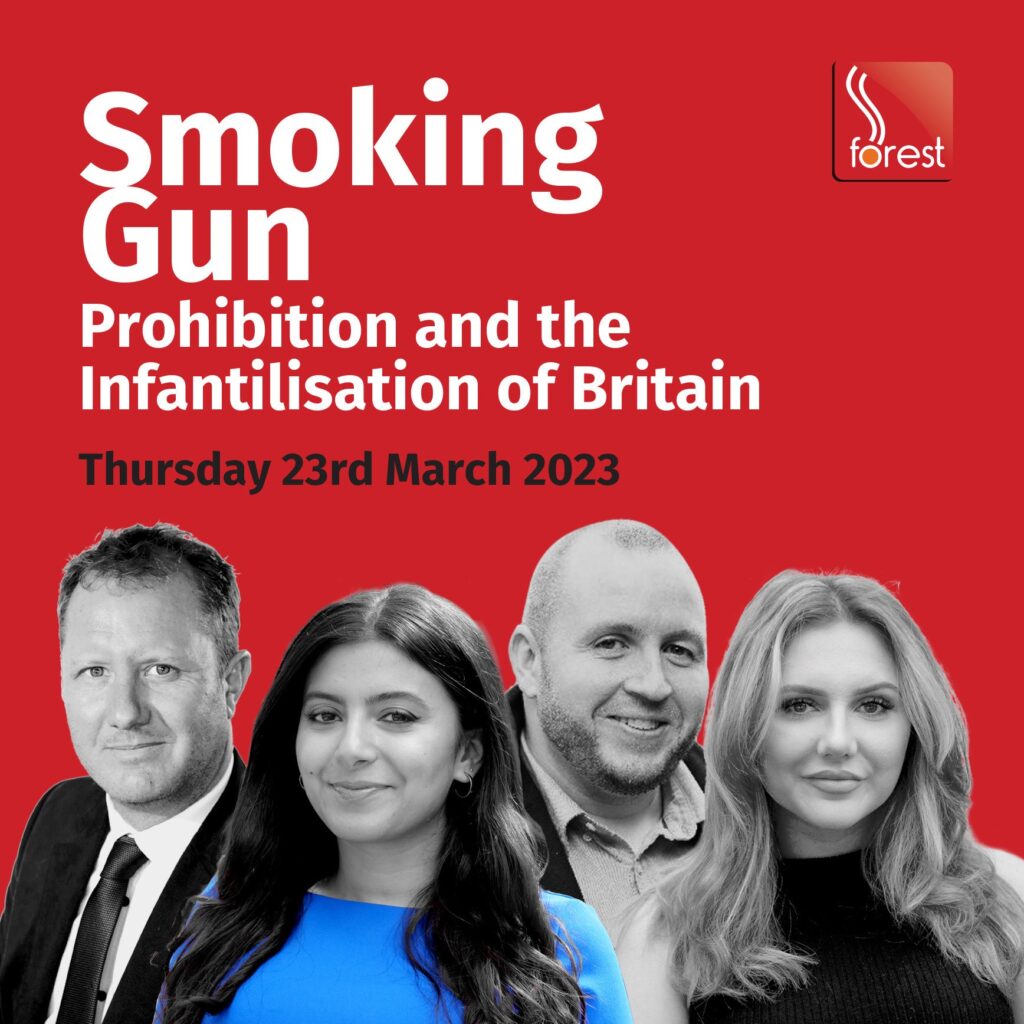
A meeting and round table event by the smokers’ rights group FOREST which met on Thursday 23rd March focused on forms of prohibition and the infantilization of Britain caused as a result. The debate in front of a live audience, which was followed by questions and answers from the panel, was moderated by the president of the smokers’ union, Simon Clark, engaging four other members of the union with the dialogue they conducted: The director of lifestyle economics from the Institute of Economic Affairs (IEA) Christopher Snowdon, Conservative Home magazine columnist Henry Hill, The Spectator World (US version) columnist Kara Kennedy, and the IEA’s director of communications Reem Ibrahim, who also studied philosophy at the University of Liverpool. The first and the last of those panelists described to the panel that they quit smoking using alternatives whilst the other two said that they smoke, unlike the director of the smokers’ group who does not smoke.
Simon Clark, director and Chairman of FOREST, started the conversation by saying: “I’m Simon Clark, I’m director of FOREST and tonight’s discussion is about the potential prohibition of tobacco or at least making smoking Obsolete, and what may lie beyond that, because it’s pretty clear that the public health industry won’t stop with smoking, they’ll move on to other things like vaping, and we’re already seeing them move into areas such as eating and drinking. “
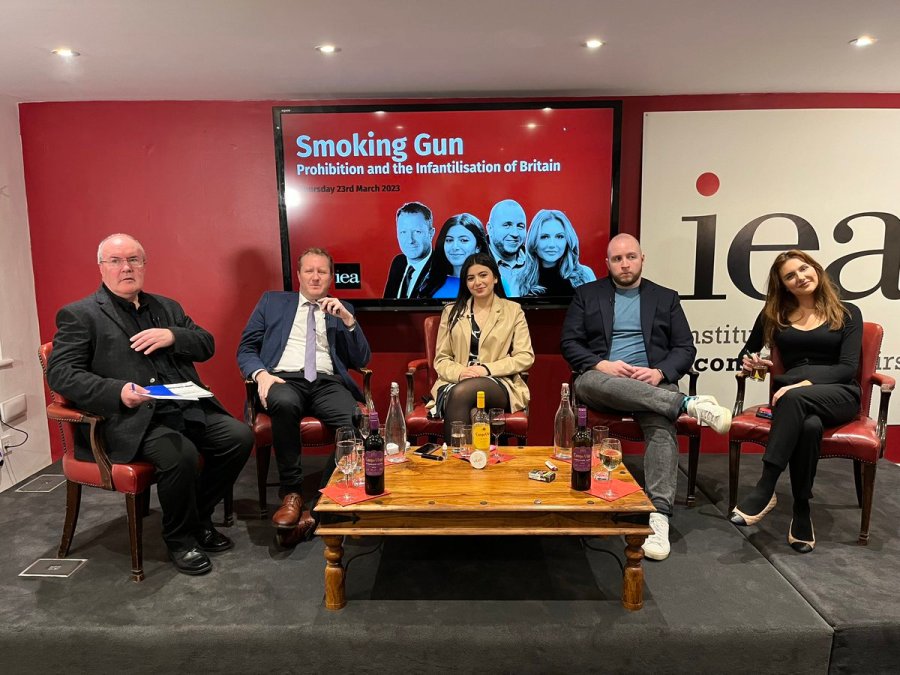
“I’m going to introduce our speakers in a moment, but before I do that, I want to briefly explain the purpose of tonight, and why we’re discussing this topic now in relation to Tobacco. The threat of prohibition is nothing new, we’ve seen creeping prohibition for at least the last 15 years or more; the smoking bans of course banned smoking in all public places many of which were essentially private businesses like pubs and restaurants. Since then we’ve had the display ban, we’ve had plain packaging, we’ve had a ban on menthol cigarettes, which was not many people commented on it at the time, but at the time menthol cigarettes were represented 20% of the cigarette Market in the UK, so when they were banned that made a huge… so that was a huge blow to millions of smokers who like menthol cigarettes, and overnight had them taken away, and of course with public smoking bans we’re now seeing that they’re being extended into outdoor areas. “
“When the indoor smoking ban came in, we were told it was all about protecting the health of bar workers. Well I don’t know how many bar workers are out on these are beaches and Parks, but they’re now trying to ban smoking in outdoor areas as well, and they’ve even talk about banning smoking in social housing, so actually in people’s own homes but perhaps the best example of creeping prohibition is actually happening not in the UK but in New Zealand, where they are about to bring in – they’ve already brought in the law they haven’t imposed it yet, but basically it’s going to ban the sale of tobacco to anyone born after 2008. “
“Now likewise in the UK, we’ve had a so-called independent report, the Khan Review, which came out last year, and that’s recommended that the age of sale of tobacco be raised by one year every year until no one is allowed to legally smoke anymore, and in the meantime of course other people want to raise the age of sale from 18 to 21, and of course it’s only 2008, I think it was or 2007 when the legal age of sale was raised from 16 to 18. So, 15 years later, they’re trying to bump it up to 21, which is in our view going to infantilize all those people between 18, 19 and 20 who are legally adults but will no longer be able to choose to buy tobacco at the same time. “
“Of course, many of the politicians who are calling for the age of sale to be raised to 21 are also wanting the voting age reduced to 16. So I think that’s something else we might want to cover this evening, but it’s not just the politicians and public health campaigners who are targeting cigarettes, even the Global Tobacco giant Philip Morris has urged the UK government to ban the sale of cigarettes in England by 2030, and last year in Scotland the UK’s leading Vape retailer VPZ launched a campaign urging the Scottish government to ban smoking for good, although I’m pleased to say that the petition that that campaign set up on the Scottish Parliament website only got 301 people to directly sign as that campaigns have crashed and burned a bit, but even vaping products aren’t safe because there are currently demands to prohibit flavour the liquids and disposable Vapes, which would of course deny adults legal access to a product that’s helped many smokers quit a potentially more harmful habit.”.
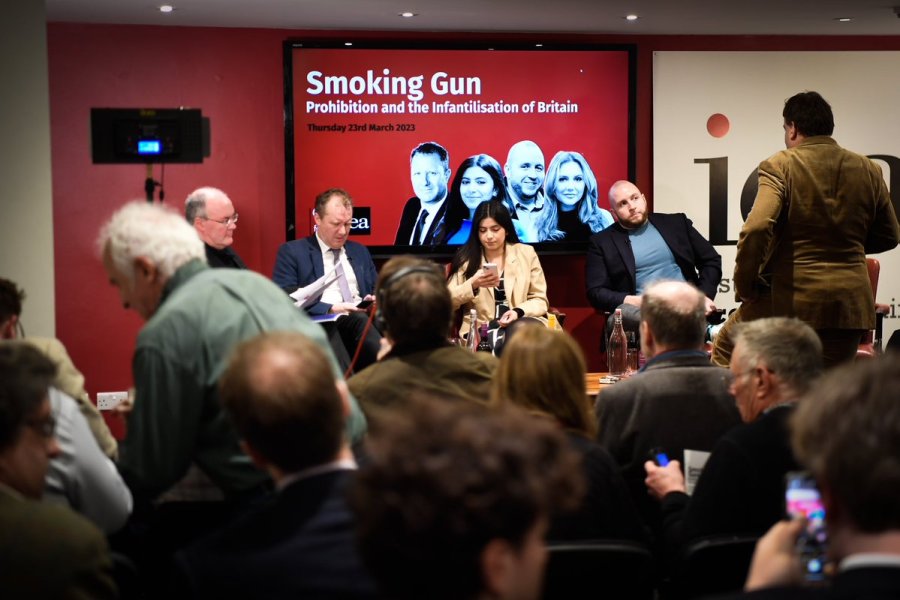
Questions asked by the audience included a question on whether Brexit was caused by the smoking ban, on whether marijuana will be legalised first or smoking delegitimised before that via raising the age limit to buy tobacco by one year every year, on whether electronic vapourisers that include disposable devices should be sold in pharmacies instead of newsagents so that they are not sold illegally to underage teenagers who are making increased use, and on any existing connection between smoking prohibition and the feeling of being woke in public.
To the latter question mentioned above coming from a member of the audience, Christopher Snowdon answered that “They’re both inherently intolerant, they’re authoritarian in effects, woke is a very broad term, but if you’re talking about kind of remaking Society along some kind of utopian ideal which is how I would interpret it, then the idea that everybody is incredibly healthy, doesn’t take any risks, seems to be in line with that, and I don’t know, I’m way too young really to know what the blue head woke people believe, it well maybe smoking is coming back amongst those communities, in which case I’m actually despite what I said earlier totally in favour of it, but I don’t think it is, I think there’s a pure retail class, but isn’t it the whole thing? Andrew Door wrote a book about the woke people, it was titled ‘The New Puritans’, and puritanism is a very good way of looking at that movement, because it was very iconoclastic, they’re about smashing down statues, destroying history, but also Puritan the usually accepted sense is no drinking, no taking drugs, no having fun, no dancing, whatever, it’s very much part of the same parcel, but at the same time it precedes the woke Movement by decades, there have always been Puritans of all sorts of different Shades and stripes, and the modern identity politics Puritan is one of those kind of strands, but they fit together very nicely, but I don’t think either is dependent on the other.”.
Simon Clark: ” – Another proposal is for the government to impose so-called tobacco levy on the tobacco companies which would pay for more smoking cessation services and more anti-smoking campaigns, now, we know that that Levy will be passed on to Consumer, so it’s going to push up the price of cigarettes even more – I mean, do we actually need more smoking cessation services, and anti-smoking campaigns?”
Henry Hill: ” – I don’t think so but I’m an independent smoker and I’m actually actively postmodern, because it’s a fact of living in a Democratic Society, that if you want your habits and preferences to be left alone, you do need a certain critical mass of people to share them you know… responsible started falling to a dangerously low share of the population that all of this nonsense really started Gathering steam, so we need in fact fewer and ideally we’d allow advertising and all of that good stuff, so that we could try and get smokers back up to a sustainable share of the population.”
Watch the full event organised by FOREST on the following video:
 Bring Back Smoking Freedom