People smoke for the nicotine, but die from the tar.
Michael Russell
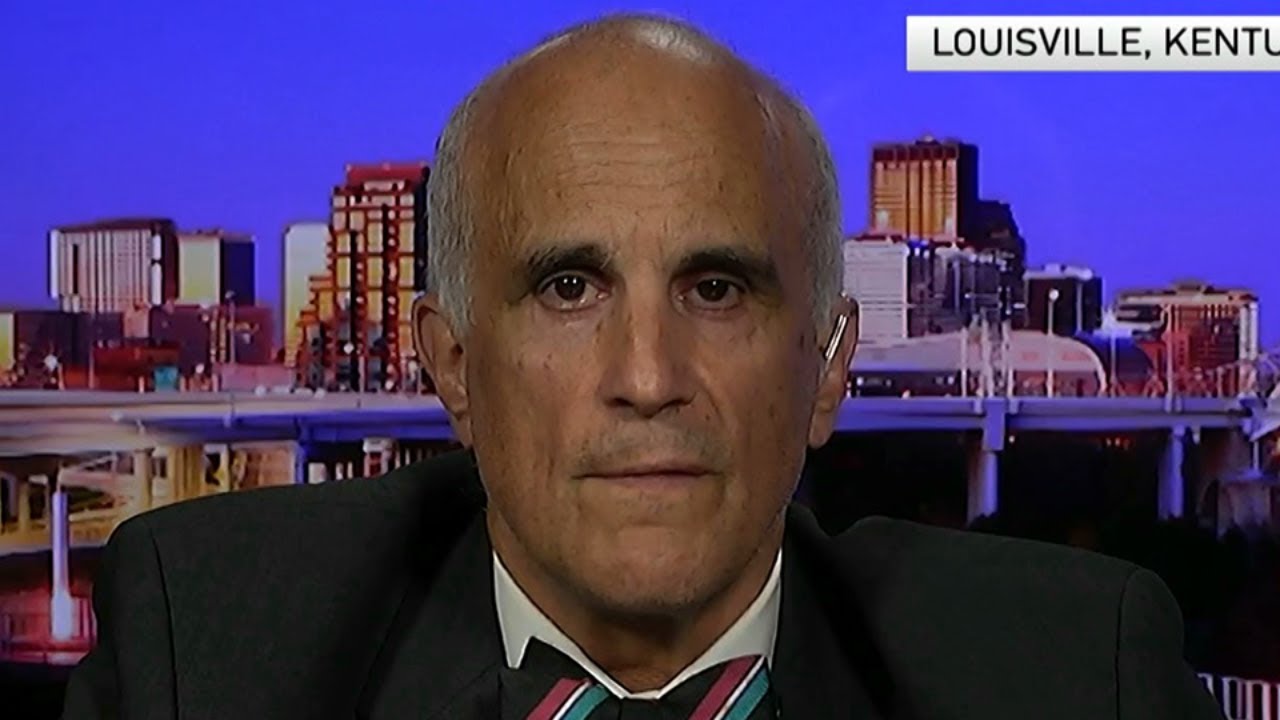
Dr Brad Rodu who won the Michael Russell Award at the GFN22 international pro-vaping conference in Warsaw talks on the occasion about what creates and contributes to the inclination of science to approach more and more favourably the anti-smoking campaign and its objectives and meet its own opinions, giving his opinion on nicotine addiction issues. It is taken for granted that science is the sole raison d’être of the anti-smoking campaign which adopts its findings to act in response to shape but Dr. Brad Rodu claims and brings to light evidence that this is reversible on the commuting principle containers and that the existence of the anti-smoking campaign feeds subjectivity into the scientific outcome of the same events. Dr. Brad Rodu is an internist teaching at the University of Louisville in the US state of Kentucky. Read the interview he gave to a Canadian journalist from Regulator Watch.
Welcome to another edition of Regulator Watch on TV here in Warsaw, Poland, for the Global Nicotine Forum G.F.N. 22 and with us is Dr Brad. Thanks for coming back to the show.
It’s great to be back with you. I am a professor of medicine at the University of Louisville in Kentucky. I also hold an endowed chair in tobacco harm reduction research at the Cancer Centre there. I have been conducting tobacco research and advocating for safer cigarette substitutes since 1994, 28 years now.
How much of that time were you abroad?
Enough of that. It’s been a struggle to get this information out to smokers so they can make life-affecting health choices.
So what was it, I guess, was it in your medical experience that you saw that some of them know what smoking does to the body?
Correctly. I am an oral surgeon and I work in a Cancer Centre treating and diagnosing microscopically and clinically many types of cancer and immunosuppressed cancer patients undergoing treatment. I saw a lot of cancers in so many of them in smokers and at that point the 2 minute warning is over and people look at the evil and so that prompted me to find a way to help smokers quit that didn’t involve the complete abstinence from all nicotine and tobacco products.
Does smoking actually prevent cancer or is it too late?
At some point obviously the more you smoke the greater the risk and the more likely you are to get a fatal disease, but to be honest with you, you can quit almost any time before you turn 40 and avoid almost everything else that doesn’t it’s widespread now, but that’s the data, that’s what the statistics say, and so the sooner the better, but cutting at any, almost any age, and we prove that in research reports and almost any age improves as opposed to to continue smoking at this age to say you are a 30 or 35 year old male who has been smoking for 15 or 20 years, quit from vaping with nicotine.
Would you enjoy the same benefits as if you quit smoking altogether?
Of course, we don’t have more long-term epidemiological studies from vaping, but from everything we know about the chemistry, about what’s in vaping, we’re very confident that the benefits will be lasting and long-term compared to the rest about a disease associated with smoking, we know from studies of the Swedish news and American smokeless tobacco products that contain a lot of nicotine but no smoke, we know that this is a benefit for people who switch, so here is the world forum on nicotine at a conference that centred around nicotine.
People don’t understand this and what it is?
Before I get to that question, you know 9 years specifically for the American public, that’s 3.6 million dead smokers, that’s why we’re here and that’s happening all over the world and that’s why we need a global effort to motivate smokers who unable or unwilling to cut it into safer products.
So what is this issue that so many people have been working on until you certainly haven’t, and why isn’t the FDA and WHO sharing this with you?
As you said about nicotine, that’s one of the problems, the overwhelming view of smokers and non-smokers and including professionals is that nicotine is not only addictive, but nicotine is the cause of many of the disease where smokers have higher risks. This is the lie and then it is disappointing that the FDA which is the regulator of nicotine in tobacco has not tried to correct this misinformation, especially with American smokers.
So is nicotine safe?
I think nicotine saves about as much as another widely consumed addictive drug called caffeine is available in coffee, there are many people who are addicted to it, but long-term caffeine consumption has virtually no serious health effects. This is what we know about nicotine. It’s not the same drug, nor does it affect the brain in the same way, but we believe the lack of serious health events is almost equivalent to that of caffeine, and I’ve been saying this without pushing since 1994.
So if you’re out of the majority and you’re a non-smoker and for some reason you wanted to get nicotine, is there anything wrong with that?
I see no major problem with people finding benefit in using nicotine in a smokeless delivery system. I don’t see a significant impact on that, not on all the other health issues that helping professionals worry about with respect to our patients.
In terms of what is being heard all the time and actually something that is increasing is that nicotine damages the developing brain.
Yes, we hear that, and my response was that it actually exists outside of some animal models that overloaded growing mice with large doses of nicotine. Besides, there is virtually no human evidence that nicotine has affected brain development, and let me give you an example. We have 30 million adult smokers in the United States. We have somewhere twice as many as 60 to 70 million ex-smokers. It has never been shown clinically that these current or ex-smokers differ in any way from long-term non-smokers. There is no evidence for this at all, so how can they say that teenagers affected their brain development with the brain scan wires now? But no one has ever shown any results, so how come the CDC is doing this quietly and it’s being done by many government agencies involved in the control that nicotine was developed into. Brain research that I just saw recently in the last month is trying to confirm some kind of cause and effect on this, when common sense to show that it can happen has also tried to produce these results in cells grown in laboratory conditions and I can tell you say I was involved in some molecular biology research. You can take cells growing in a dish, you can talk to them and make them do almost anything you want them to do. You can have anything, any impact you want, but when you do that in normal human doses, in the whole human, you don’t get the same cellular effects, and so I think all this research is blown out of proportion for two reasons:
- Number one is to prove that nicotine is a demonic drug
- and number two is to get more and more funding.
You need to make your research as relevant as possible so you can get funding for the next round and keep rolling in that funding stream.
There is no reliable evidence that nicotine causes cancer from these studies or taking nicotine and isolating it and in cells and trying to produce effects at the gene level or other effects that are then claimed to be related to the development of cancer in humans. Let’s take Swedish men, they probably have the highest prevalence of smokeless tobacco use of what we call snus in the entire developed world, and they could find virtually no effect on cancer incidence or cancer mortality among those men who use snus for a lifetime. So impact cells don’t translate to human impacts, and that’s what I think we need to focus on.
This G.F.N. conference, why is it important to take place?
It’s also exciting because it’s not just academics or tobacco control practitioners talking to each other, it’s a wealth of people interested in tobacco harm reduction for substitutes, but they come from all directions, there are professionals here, but there are also consumers. Consumers have a role to play. Nothing about it is too big a deal and I’m always excited to show up on 22 to discuss these issues with affected consumers, because again that’s how I was brought up. I dealt with the patients but it’s too late. The consumers have used these products just in time.
Now you were recognized last night with Dr Michael Russel with an award for your work on this review; what does it mean to win this award?
Well it was overwhelming. I have spent 28 years in this field and, as I mentioned earlier, I came into the field as a pathologist who had experience with the end results of a career of smoking compared to what people in tobacco control who specialize in stopping addiction in psychiatry and psychology with audiences and how they have a different focus. It’s a great focus that they haven’t seen as many of the results as I have, so I’ve always considered myself a bit special and I’m never part of the usual groups of people trying to promote tobacco harm reduction, but this award lasted overnight, based on the father of this idea, the visionary who saw this years before anyone else, said that when I first published my first paper and was naive to the smoke about the same as the paper, I was first in my articles because I knew who had the best research, and he did, and so I loved him like everyone else heard that and to be awarded with my name anyway in the same universe as Michael Russell’s name is just incredible. One of the things attendees hear at a G.F.N. or we struggle where is how to find a way to somehow bridge the gap in public health on this issue.
Is there a split on what to do or is there a split but the advice is still too skewed?
I mean, when I came into the field, I couldn’t find a partner or another that has the same interest and safer products, now there is a small group of people in many countries who are definitely interested in helping smokers quit. That’s why this event is so important, because it brings people together and allows us to share ideas and decide where to go next, but it’s still a relapse. I have a use that I will have to tell the public, that the dominant numbers and public health are still very much against us, and that means all the big medical companies of all the US and Canada all the big government agencies. It is still a very long side of the exhibition. I think one of the major goals in the United States and that’s being adopted more and more in Canada is this idea of a smoke-free society in the way that the capital government uses a pretty significant budget and the National Institute of Health N.I.H. to fund academic researchers across the country and mostly their goal is to find bad guys in events of any form of tobacco use and right now the emphasis is on e-cigarettes and vaping, now topped off with a transfer of somewhere around $300 million (?) in tobacco user fees from the FDA there to feed this pipeline, now when these researchers are funded for these results and it doesn’t matter where they had an original interest in tobacco or not, they take their research program and adapt to tobacco resources and they receive grants, and then the most important result of these grants, the most obvious results are negative against any tobacco use, and so it tends to promote more and more outrageous findings to reach
- firstly in the media and secondly
- to reach the next grant,
and these outrageous findings sometimes border on what is considered treachery, and with that he had some activity.
What do you mean fraudulent?
Results that simply do not apply from government funded research and so if a person like me at a university wants to get other colleagues to participate in some other tobacco harm reduction research project, other researchers, most of whom they’re funded by the National Institute of Health, they never want to risk alienating the funding agency no matter what the researchers are, because they know what the cutting edge intentions are for tobacco, so it’s a big problem and it affects almost all university research.
And the government seeks to pay for research that will support the preconceived position on tobacco?
I think this is the case, government funding is negatively supporting tobacco research and has never been interested in a balanced approach to the thermal reaction product. Let me give you an example: in 1994 I published my first order target basically indicating that smokeless tobacco was less dangerous, it is less dangerous than cigarettes and should be considered by smokers who cannot quit. The National Cancer Institute which is the biggest part of the National Institute of Health and agencies told my university that this idea was unethical, that no one should talk about it and told me I was good enough to go to school, they challenged the position of my professor at my university and challenged the university that this idea was not to be tolerated. And I don’t think that mentality has changed in any way in the last 28 years. It drives everything to universities and the classification makes it very difficult for anyone barking at the major to get anywhere.
What is your advice for people who are attending this conference, those who are watching online in terms of promoting to ensure these higher rights for consumers to have access to these tobacco harm reduction products?
- When a study is published, don’t just read the headline because the headline is created by the researcher who is funded by the National Institutes of Health, taken to the university, the media relations department always wants to get maximum exposure, and then the crusaders against of tobacco always want to use it to reduce tobacco products, never mind the headlines.
- The second thing I’m trying to share with the panelists here is that we need some sort of post-publication review that’s systematic, and I’m not just talking about reading the paper and trying to find small fish, but getting their data, the data they use and conduct a new analysis because when we’ve done this with many studies now we’ve come up with big big problems and we’ve published letters to editors in journals and journal editors are very reluctant to change decisions based on a challenge after the publication, but we have a couple in the process right now, as you know, we took care of a particularly outrageous study that claimed that vaping causes heart attacks that were completely invalid, completely fragile, and because these heart attacks happened 10 years before these participants they got an e-cigarette, so that’s the kind of review, it’s the kind of work that needs to be done to keep it under control.
 Bring Back Smoking Freedom